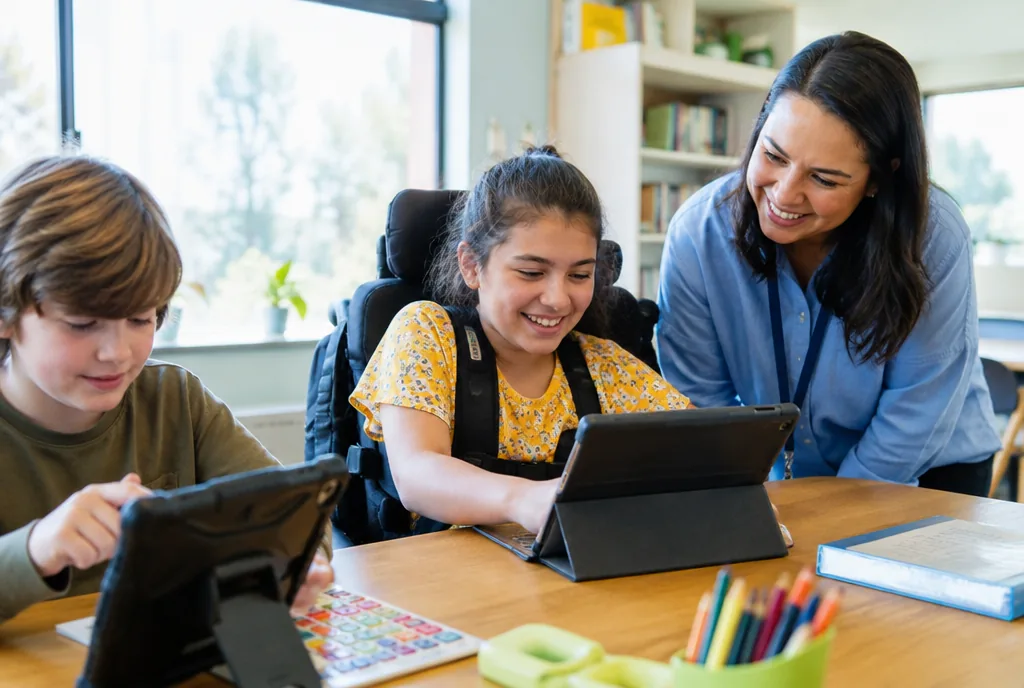
Kids with Auditory Processing Disorder often struggle with schoolwork, particularly when lessons are lengthy or include several steps. They frequently have trouble with speech and language because they cannot tell apart similar-sounding letters and sounds.
Advertisement
For example, words that start with "Pr" and "Dr" may sound exactly the same to a child with ADP. Many children with Auditory Processing delay will need additional help from a Speech-Language Pathologist to stay at the same speech and language level as their peers. These children commonly show weak auditory memory and learn better through visuals. Classroom visual supports can guide them through tasks and clarify what they should do next. Problems with organizing are also frequently seen in these students. Auditory Processing Disorder in ChildrenStudents may need a classroom buddy or aide to help organize materials and make sure assignments make it into their backpacks. They can also have trouble focusing on sounds when there is a lot of background noise at home or school. Sometimes it may look like the child is not hearing, not paying attention, or being defiant. Attention Deficit Disorder, (a common misdiagnosis) as their brain tries to keep up with processing verbal information.
Researchers are still trying to identify the exact cause of Auditory Processing Disorder in ChildrenSome people think factors such as lead exposure, head injury, or repeated ear infections could play a role. A Speech-Language Pathologist experienced with auditory processing or an audiologist who diagnoses auditory processing disorder can provide a correct evaluation. An accurate diagnosis allows parents, teachers, and aides to coordinate appropriate support at home and in school so the child can do better.