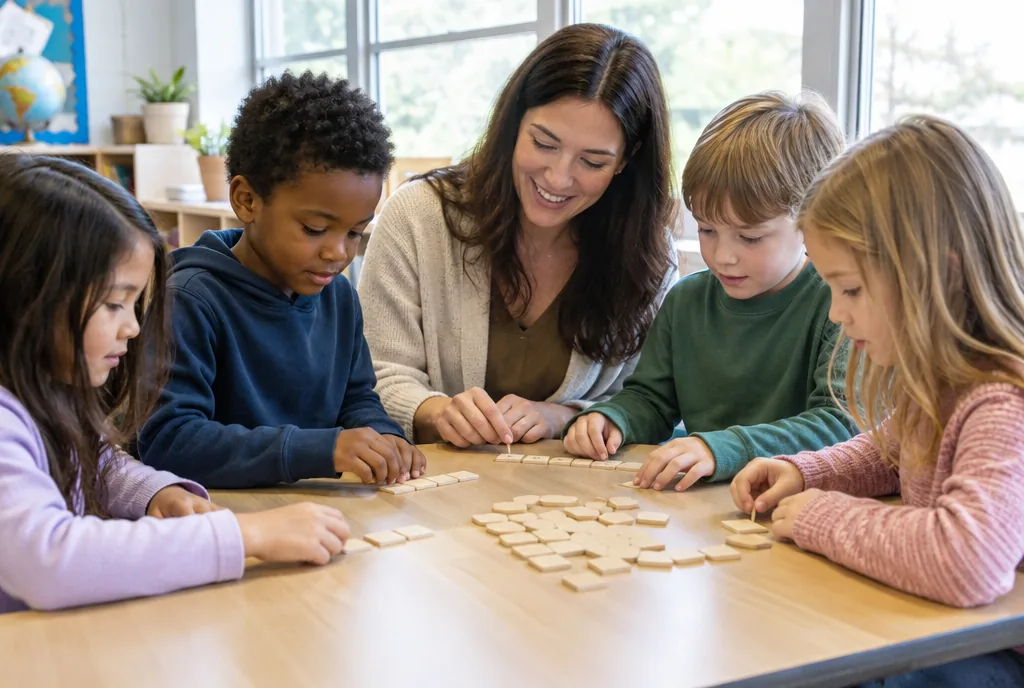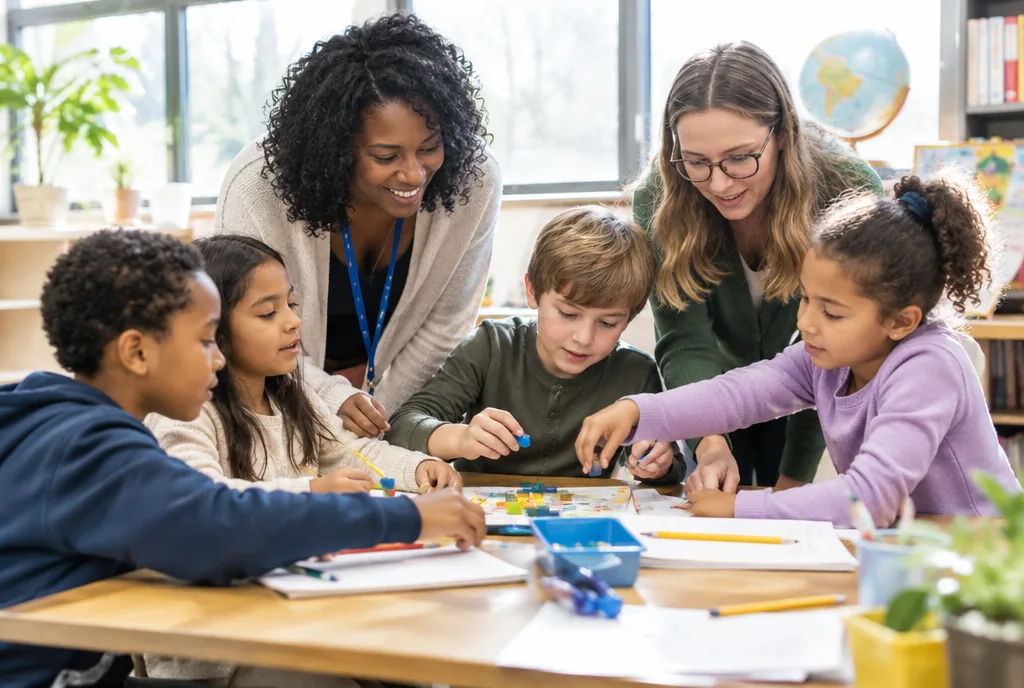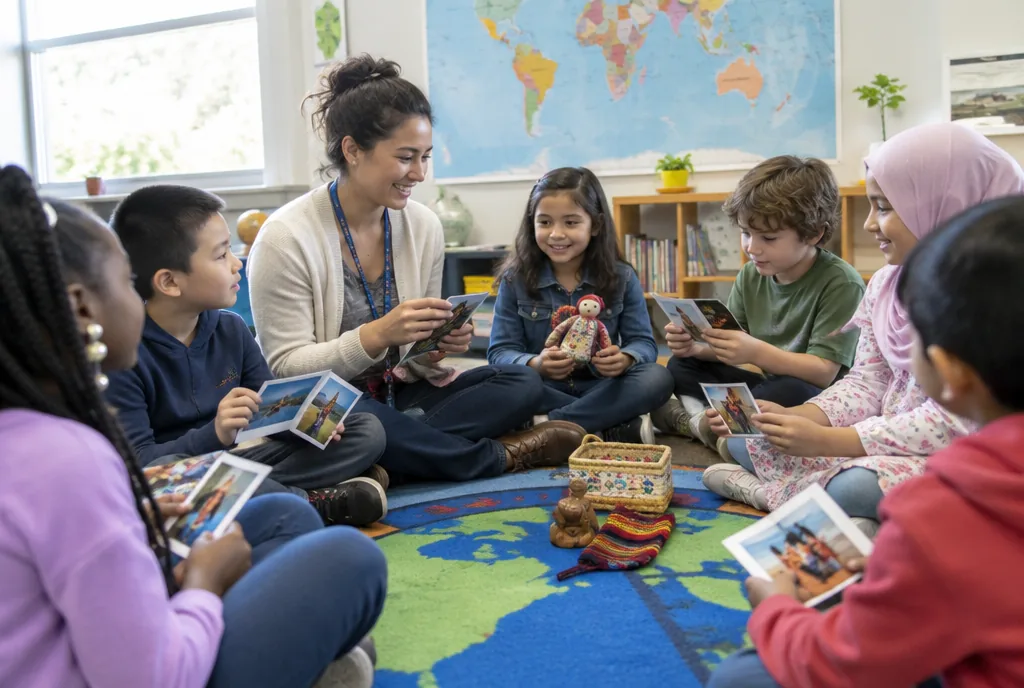
Culturally responsive teaching is an approach that uses students’ customs, characteristics, experiences, and perspectives as tools for stronger learning. Instead of treating differences in language, family life, or community knowledge as obstacles, you use them to make a demanding lesson more meaningful. A science teacher might connect a plant-life-cycle lesson to a family’s gardening knowledge; a writing teacher might use a student’s storytelling traditions to explore narrative structure. The point is not to make school easier. It is to make rigorous learning more accessible and worth doing.
What culturally responsive teaching means in a real classroom
Geneva Gay coined the term culturally responsive teaching in 2000. Her definition centers on using the cultural characteristics, experiences, and perspectives of ethnically diverse students as conduits for teaching them more effectively. In other words, culture is not a decoration around the lesson. It helps shape how you introduce content, build relationships, choose materials, and invite students to show what they know.
Gloria Ladson-Billings introduced the related term culturally relevant pedagogy in 1994. Her work began with a focused question: why were some teachers exceptionally successful with African American students while others were not? She interviewed and observed eight excellent teachers. Her conclusion was not that good teaching requires a single cultural script. It requires teaching that protects students’ cultural integrity while pursuing academic excellence.
This approach starts with an asset view. Every student arrives with knowledge from home, language, work, faith, neighborhood, hobbies, and family relationships. The “funds of knowledge” approach makes that idea practical: homes hold rich cultural and practical knowledge that belongs in learning. Before a unit on measurement, for example, you might ask students where their families measure, estimate, build, cook, budget, or repair. Their answers can become entry points into the same grade-level math goal.
Three principles keep identity and high expectations together
Ladson-Billings described three pillars of culturally relevant pedagogy: academic success, cultural competence, and critical consciousness. Together, they prevent culturally responsive practice from shrinking into a celebration calendar or a collection of diverse books.
- Academic success means intellectual growth, problem-solving, and moral development, not only test scores. High expectations mean a firm belief that every student can work toward academic excellence, with clear teaching and appropriate support.
- Cultural competence means students learn to value their own culture while building competence in at least one other culture. A classroom can make room for a student’s home language and still teach the conventions needed for a formal academic task.
- Critical consciousness helps students notice, analyze, and address social inequities. A lesson about migration, climate change, or social justice can ask whose experiences are represented, whose are missing, and why.
High expectations are especially important. Research cited in the CRT literature finds that teachers can hold systematically lower expectations for students of color, creating self-fulfilling prophecies. Culturally responsive teaching does not respond by lowering the intellectual demand. It asks you to teach the route into complex work: state the goal, model the thinking, explain why the task matters, and give students repeated chances to practice.
Use culture as a learning pathway, not a label
Zaretta Hammond’s Ready for Rigor framework gives teachers four practice areas: Awareness, Learning Partnerships, Information Processing, and Community of Learners and Learning Environment. The framework is useful because it connects belonging with cognitive growth. Hammond distinguishes between dependent learners, who rely on the teacher to process content, and independent learners, who can direct their own learning. The aim is to build students’ capacity to do the demanding thinking themselves.
| Practice area | What you can do | A concrete classroom move |
|---|---|---|
| Awareness | Examine your own cultural lens and learn how culture can operate at surface, shallow, and deep levels. | Notice whether you read one communication style as “engagement” and another as disinterest before drawing a conclusion. |
| Learning partnerships | Treat the teacher-student relationship as a partnership built on trust. | Ask a student which examples, topics, or ways of practicing help them enter a difficult task. |
| Information processing | Use methods such as storytelling, call-and-response, music, and movement to anchor content. | Have students rehearse new vocabulary through a rhythmic response before applying it in writing. |
| Community of learners | Create a safe learning environment and use restorative principles to address conflict. | Guide students to repair a classroom conflict through a structured conversation rather than only removing them from learning. |
Hammond separates culture into three layers. Surface culture includes food, clothing, and holidays. Shallow culture includes language, politeness, and nonverbal rules. Deep culture includes learning styles, views of time, relationships, and worldviews. A heritage-month display may acknowledge surface culture. Responsive teaching also pays attention to the deeper patterns that can shape how students take in, process, and store information.
Start with classroom strategies students can feel
You do not need to rebuild every lesson at once. Begin by activating prior knowledge. Ask what students already know about a topic, then connect the new content to familiar cultural experiences. If students are studying persuasive writing, have them identify arguments they encounter in family conversations, community meetings, advertisements, or social media before they analyze formal examples.
- Learn before you assume. Use conversations, family questionnaires, or community members to learn about students’ interests, languages, experiences, and strengths.
- Audit the curriculum. Check for cultural bias and gaps in representation. Geneva Gay recommends examining cultural content for its quantity, accuracy, complexity, placement, purpose, variety, significance, and authenticity.
- Make the goal explicit. Name the learning target, the strategy students will use, and the reason for the task. Explicit instruction helps students see the “why” behind the work.
- Make learning social. Use paired interviews, collaborative work, and structured talk. Students can interview one another about cultural backgrounds and learning experiences, then use what they learn to build understanding.
- Tell and move. Embed new ideas in stories; use music, movement, or call-and-response when they genuinely support the concept rather than merely energize the room.
A culturally varied classroom library is another visible starting point. Include books with characters from different ethnicities, age groups, genders, and family forms so more students can see themselves represented. Then go beyond representation: ask students what a text assumes, which voices it centers, and how its ideas connect to their own lives.
Family engagement gives you better information to teach
Families are learning partners, not an audience that must prove involvement by attending a school event. A missed conference can reflect work schedules, transportation barriers, or negative prior experiences with schools. The more productive premise is that parents care and know what their children need.
Make communication accessible in a family’s home language. Translate invitations, forms, and announcements, and use bilingual communication tools when appropriate. Offer more than one route into the relationship: a phone call, a questionnaire, a conversation with a community member, or a home visit can reveal knowledge that a standard school form never captures. A family may share multilingual skills, hands-on expertise, or storytelling traditions that become useful resources for instruction.
For parents, a practical first step is to tell the teacher how your child learns, what languages are used at home, and what knowledge or interests light them up. For teachers, the first step is to ask without turning a family into a cultural spokesperson. One family’s experience is information about that child, not a rule for everyone who shares an identity.
In special education, responsiveness can interrupt harmful patterns
Culturally responsive teaching matters before, during, and after special education decisions. Federal data cited in the research show that Black students are 40 percent more likely than all other students to be identified with a disability. They are also twice as likely as White students to receive the categories “emotional disturbance” or “intellectual disability.” American Indian students are four times as likely as White students to be identified with “developmental delay.”
These disparities make careful interpretation essential. Behavior, communication, language development, and school experience can be read through a cultural lens. Gay argues that many students of color are disproportionately assigned to special education because educators lack knowledge of or appreciation for their cultural backgrounds. That does not mean culturally responsive teaching replaces a disability evaluation or the services a student needs. It means the evidence, instruction, relationships, and referral process deserve closer attention so cultural difference is not mistaken for disability.
IDEA requires states and districts to address significant disproportionality, or the overrepresentation of particular racial or ethnic groups in special education. Affected districts must implement Comprehensive Coordinated Early Intervening Services. In daily practice, families can ask how the school distinguished a language, cultural, instructional, or access issue from a disability-related need. Teachers can document the supports already tried, seek family knowledge early, and examine whether expectations or discipline practices are shaping a referral.
English learners need access to ideas, not pressure to erase language
English learners made up 10.6 percent of U.S. public school students in fall 2021, up from 9.4 percent in 2011. Spanish was the home language for 77.9 percent of English learners, followed by Arabic and by English, which is the home language of some English learners from multilingual households or international adoptions. Language diversity is therefore a routine part of U.S. classrooms, not an exception to plan around.
Some English learners also receive special education services: 15.8 percent were identified as students with disabilities in fall 2021, compared with 14.7 percent of the overall student population. Responsive teaching links new concepts and vocabulary to students’ home languages and cultural references rather than treating those resources as interference. Multilingual picture books, sign language, visual supports, cooperative learning, and home-language connections can help students enter grade-level ideas while they develop English.
When a student gives an answer using a home-language word, you can acknowledge the concept first and build the English academic vocabulary alongside it. That response protects meaning and invites participation. It also avoids the false choice between honoring a student’s language and teaching English.
Four myths can derail culturally responsive teaching
- “It is just multicultural books and holidays.” Those materials can matter, but CRT is a deeper shift in instruction, curriculum, relationships, and expectations.
- “It lowers standards.” CRT pairs cultural affirmation with the belief that every student is capable of academic excellence.
- “It means students from one group learn the same way.” CRT requires you to know individual students and avoid stereotypes. Culture is a resource for inquiry, not a shortcut to assumptions.
- “It solves disproportionality by itself.” CRT is a promising approach for addressing educational inequity in special education, but it does not replace careful evaluation, services, or a district’s legal responsibilities.
Build a responsive routine one lesson at a time
Choose one upcoming lesson and make four small changes. First, reflect on your own expectation: who do you assume will find this task easy or hard, and why? Second, ask students one question that activates relevant prior knowledge. Third, offer a way to process the content socially, through a partner explanation, story, movement, or structured response. Fourth, review the materials for whose experiences are present and whose are absent.
Then listen for evidence. Are more students contributing? Can students explain the purpose of the work? Did a family conversation reveal a better example or support? Culturally responsive teaching is not a script to perform once. It is a continuing practice of learning about students, teaching with rigor, and adjusting what you do in response.
Frequently Asked Questions
What is culturally responsive teaching?
It is teaching that uses students’ cultural characteristics, experiences, and perspectives as assets and pathways for effective learning. Geneva Gay coined the term in 2000.
What are the principles of culturally responsive teaching?
Ladson-Billings’ related framework emphasizes academic success, cultural competence, and critical consciousness. Gay also describes knowledge of diversity, relevant curriculum, caring learning communities, cross-cultural communication, and cultural congruity in instruction.
What are examples of culturally responsive teaching?
Examples include connecting a new unit to students’ prior knowledge, building a classroom library where varied students see themselves, using storytelling or call-and-response to reinforce content, and making learning collaborative.
What strategies can teachers use?
Learn from students and families, check curriculum for bias and representation, state learning goals explicitly, build authentic relationships, and use language, visuals, stories, movement, and peer learning to support information processing.
How does culturally responsive teaching relate to special education?
It helps educators examine whether cultural background, language, expectations, or school practices are affecting identification, instruction, and discipline. It complements rather than replaces disability evaluation and individualized services.