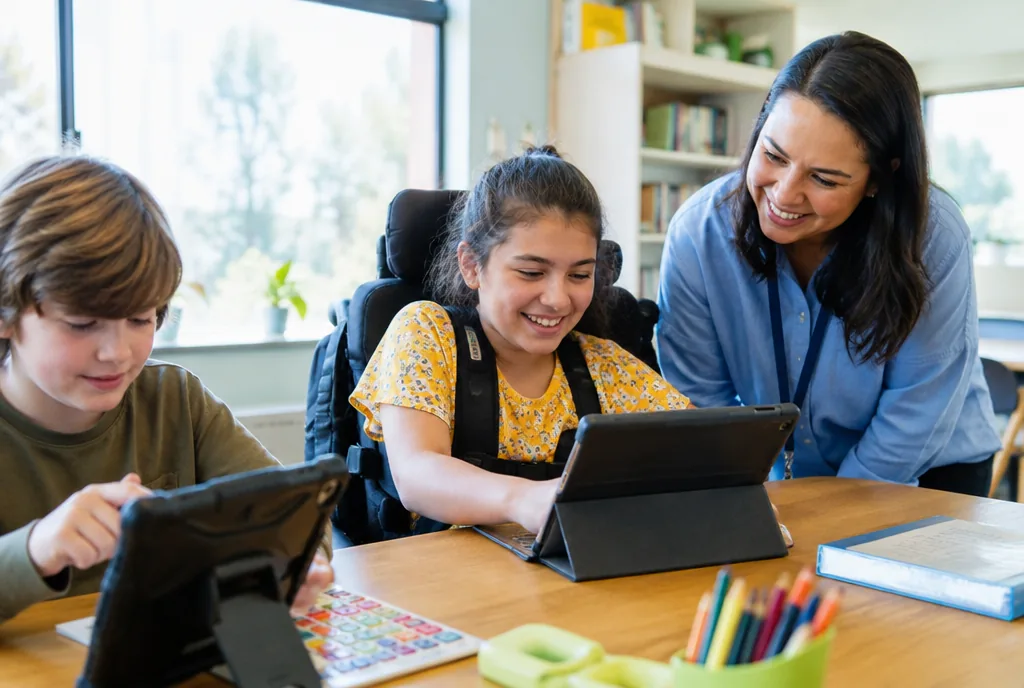
PT stands for Physical Therapy. In the public school system, it is a related service provided to students with physical or motor disabilities to ensure they can safely navigate their educational environment and fully participate in their school day.
What is school-based Physical Therapy?
A school-based Physical Therapist is a licensed medical professional who works within the educational system. Their primary focus is on a child's gross motor skills—the large muscle movements of the body required for walking, running, climbing stairs, maintaining posture, and transferring from a wheelchair to a classroom desk.
Under the IDEA, physical therapy is classified as a "related service." This means that the school must provide it if the IEP team determines it is necessary for the student to benefit from their specially designed instruction. A student who uses a wheelchair, braces, or a walker, or a student who has severe balance issues due to a traumatic brain injury or cerebral palsy, will often require the services of a physical therapist to access a FAPE.
School-based PT vs. Medical PT
One of the most frequent sources of friction between parents and school districts revolves around the difference between school-based therapy and private, medical-model therapy. It is critical for parents to understand this legal distinction.
A private physical therapist at a hospital or clinic works to maximize a child's overall physical rehabilitation, muscle tone, and lifelong mobility. A school-based physical therapist is strictly limited by educational law. They can only work on physical goals that directly impact the child's ability to function safely at school. For example, if a child cannot walk independently but can successfully and safely navigate the school hallways using a motorized wheelchair, the school PT will not spend hours teaching the child to walk without assistance. The private medical PT handles the lifelong walking goals, while the school PT focuses on ensuring the child can safely transfer out of the wheelchair to use the school restroom or sit on the carpet for reading time.
How PT works in the school environment
If the evaluation team determines a student needs PT to access their education, the service can be delivered in a few different ways, always keeping the LRE in mind:
Direct Pull-Out Therapy: The physical therapist takes the student to a specialized therapy room or an empty gymnasium to work one-on-one on specific skills, such as practicing climbing a flight of stairs or building the core strength necessary to sit upright in a classroom chair for 45 minutes.
Direct Push-In Therapy: The therapist works with the student in their natural school environment. For example, the PT might accompany the child to the playground during recess to teach them how to safely navigate the mulch, balance on the playground equipment, and physically participate in games with their peers.
Consultation: The PT works directly with the school staff rather than the student. The therapist might train the classroom teacher on how to safely lift the child, show the paraprofessional how to properly strap the child into a specialized standing frame, or collaborate with the gym teacher to modify physical education activities so the student can participate safely.
The overlap with Occupational Therapy
Parents often wonder about the difference between PT and Occupational Therapy, as they frequently overlap. A simple way to remember the difference is that PT focuses on gross motor skills (the legs, the core, walking, and balance), while OT focuses on fine motor skills (the hands, the fingers, handwriting, and sensory processing). Many students with physical disabilities will have both an OT and a PT on their IEP team working collaboratively.
What parents can do
If your child has a physical diagnosis, mobility issues, or chronic fatigue that prevents them from moving around the school safely, you should request a physical therapy evaluation in writing. If your child already has a private medical physical therapist, ask them to write a letter detailing the specific physical barriers your child might face in a busy school hallway or cafeteria, and submit that letter to the CST.
During the IEP meeting, pay close attention to the physical layout of the school. Ask the physical therapist about emergency evacuation plans—if your child is in a wheelchair on the second floor, how will they get out during a fire drill if the elevators are shut down? The PT should explicitly outline a safe evacuation plan in the IEP. Finally, ask the PT if any of the specialized seating or standers used at school can be provided for home use to ensure the child maintains proper posture while doing homework.
Key points for parents
- Physical Therapy (PT) in schools is a related service focused on gross motor skills, balance, and safe mobility.
- School-based PT only addresses physical issues that directly interfere with a child's ability to access their education and navigate the school building.
- Services can be provided directly to the student or as consultation and training for the classroom teachers.
- School PT is different from medical PT; parents often need to maintain private therapy for lifelong physical rehabilitation goals.
- The school PT is a vital resource for planning safe emergency evacuations for students with mobility impairments.