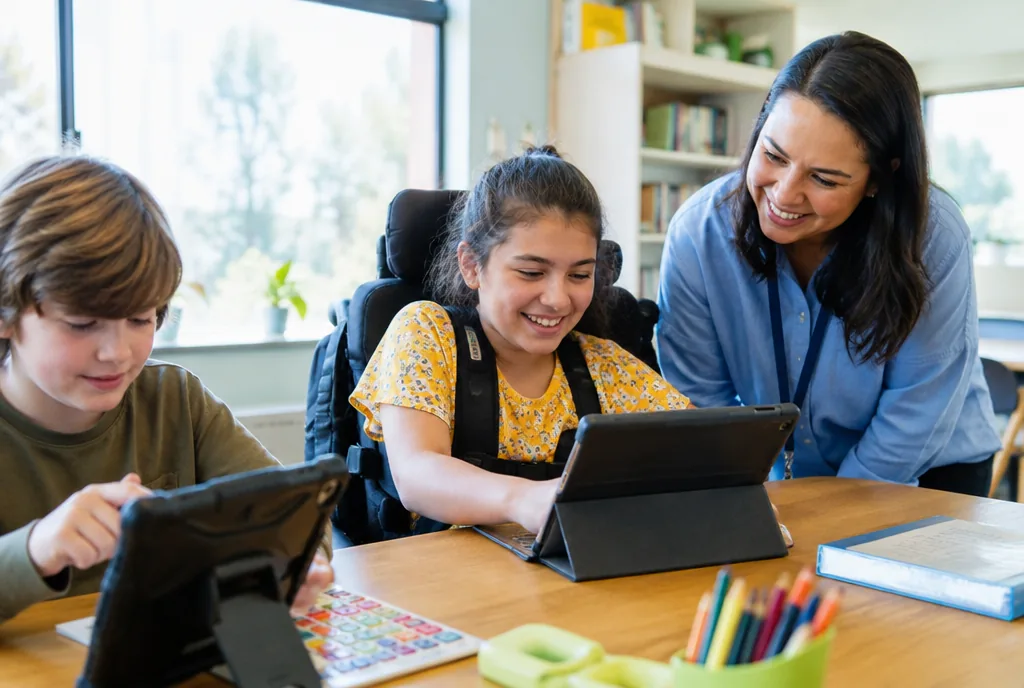
SDI, or Specially Designed Instruction, is the fundamental core of what makes special education "special." Under the federal IDEA, SDI is legally defined as adapting the content, methodology, or delivery of instruction to address the unique needs of a child that result from their disability. The ultimate goal of SDI is to ensure that the student has access to the general education curriculum and can meet the educational standards that apply to all children. Without SDI, a student is simply sitting in a classroom; with SDI, the student is receiving the targeted, individualized teaching necessary for them to actually learn and make meaningful academic and functional progress.
The Three Pillars of SDI
The legal definition of Specially Designed Instruction focuses on three distinct ways that teaching can be adapted for a student with a disability. The first is adapting the "content." This does not mean broadly lowering the educational standards for the child, but rather changing exactly what is being taught to address a specific skill deficit. For example, a student with a severe specific learning disability might receive specialized content focusing heavily on foundational phonemic awareness and decoding skills that are not typically taught to their general grade-level peers.
The second pillar is adapting the "methodology." This involves changing how the instruction is actually delivered by the educator. A special education teacher might use a highly structured, multisensory reading program, such as the Orton-Gillingham approach, which differs significantly from the standard reading curriculum used in the general education classroom. The methodology is chosen specifically because data shows it is effective for the student's unique learning profile.
The third pillar is adapting the "delivery of instruction." This refers to the instructional environment, the pacing, or the format of the teaching. It might mean delivering the lesson in a small group setting, providing intense one-on-one direct instruction, or utilizing specific pacing and constant feedback loops that a student requires to grasp and retain the material. It ensures the environment and the presentation match the child's processing needs.
How SDI Differs from Accommodations
One of the most common points of confusion for parents and even some educators is understanding the distinct difference between SDI and basic accommodations. Accommodations change how a student accesses the learning environment, but they do not change the instruction itself. Providing a student with an audio version of a textbook, allowing extra time on a test, or providing preferential seating near the teacher are all accommodations. They level the playing field, but they do not teach the student new skills.
SDI, on the other hand, involves direct, intentional teaching designed to remediate a deficit caused by the disability. If a student is given extra time to complete a math test (an accommodation), that simply helps them demonstrate what they already know. But if the special education teacher pulls the student aside to teach them a specific, alternate cognitive strategy for solving algebraic equations because their working memory deficit prevents them from using the standard method, that act of teaching is Specially Designed Instruction.
Who Delivers SDI and Where?
Because SDI is highly specialized, it must be provided by, or closely supervised by, a qualified special education teacher or a related service provider, such as an OT or SLP. General education teachers play a vital role in a student's day and will certainly implement accommodations, but the actual planning, delivery, and data collection of the specially designed instruction is the legal responsibility of certified special education personnel.
Crucially, SDI is a service, not a specific place. It can and should be delivered in the LRE for that specific child. While some students receive their SDI in a separate resource room or self-contained classroom, many students receive SDI directly within the general education classroom through collaborative models like co-teaching, where a special educator works alongside the general educator to deliver the adapted instruction seamlessly.
Documenting SDI in the IEP
Specially Designed Instruction must be clearly and unambiguously documented in a student's IEP. The IEP document should explicitly state what type of SDI the student will receive, how frequently it will occur (e.g., 30 minutes, three times a week), and where it will take place within the school. Vague language like "will receive reading support" is legally insufficient; the IEP should detail the specialized methodologies or programs that will be utilized to help the student achieve their measurable annual goals.
Parents should carefully review the IEP draft to ensure that the SDI directly correlates with the specific needs identified in the student's PLAAFP statement. If the current evaluations show a severe deficit in written expression, there must be corresponding, robust SDI designed to explicitly teach the student how to write effectively, rather than just providing them an accommodation like a scribe.
Key points for parents
- Specially Designed Instruction (SDI) is the unique, individualized teaching your child receives to address the specific deficits caused by their disability.
- SDI involves adapting the content, the teaching methodology, or the delivery of instruction to help your child access the general education curriculum.
- Accommodations help a child access the material (like extra time), whereas SDI is the actual specialized teaching of new skills or learning strategies.
- SDI must be provided by qualified special education professionals, but it can be delivered in any setting, including the mainstream classroom.
- Your child's IEP must clearly detail the specific type, frequency, and location of the SDI they will receive to ensure accountability.