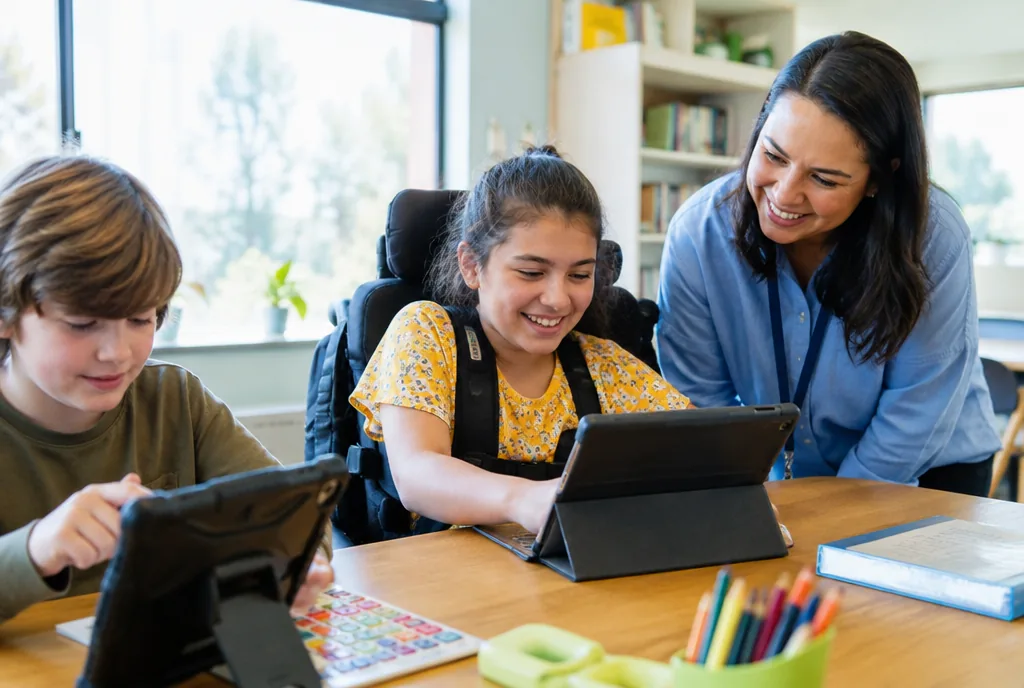
ASD is a complex developmental disability that can cause significant social, communication, and behavioral challenges, often requiring specialized instruction, therapies, and environmental support in the public school setting.
What is Autism Spectrum Disorder?
Autism Spectrum Disorder is a lifelong neurological and developmental condition that affects how a person interacts with others, communicates, learns, and behaves in their environment. It is called a "spectrum" disorder because there is incredible variation in the type, combination, and severity of traits that people experience. The neurodiversity movement emphasizes that autism is a different way of experiencing the world, not inherently a disease to be cured, though autistic individuals often need substantial support to navigate school environments that were not originally built for them.
Some autistic students have highly advanced spoken language skills, excel academically, and have typical cognitive abilities, but they struggle intensely with reading unwritten social cues, making friends, and managing severe anxiety. Other students on the spectrum may be non-speaking, experience severe intellectual delays, and require constant daily support for basic self-care and safety. Common characteristics across the entire spectrum include difficulty with reciprocal back-and-forth conversation, trouble maintaining or understanding eye contact, challenges processing nonverbal communication like body language, and an intense focus on highly specific interests.
Many children with ASD also engage in repetitive movements (often called "stimming," such as hand-flapping, spinning, or rocking) to self-soothe or express excitement. Furthermore, sensory processing differences are incredibly common. This means the child might be highly sensitive to fluorescent classroom lights, loud noises like fire alarms, or the texture of certain clothes or cafeteria foods, which can easily lead to sensory overload and emotional meltdowns.
Medical diagnosis vs. educational classification
There is a very important legal distinction between a medical diagnosis and an educational classification of ASD. A developmental pediatrician, neurologist, or psychologist can diagnose a child with autism using criteria from a medical manual known as the DSM-5-TR. However, for a child to receive special education services under the federal IDEA law, the school district is legally required to conduct its own comprehensive evaluation.
The school’s evaluation team, typically led by a CST that includes school psychologists, special education teachers, and speech-language pathologists, must determine that the autism characteristics directly and adversely affect the child's educational performance. The law dictates that schools must look at education broadly—it is not just about reading and math test scores. If an autistic child earns straight As on their report card but is paralyzed by social anxiety, unable to work in collaborative groups, or has constant meltdowns due to the noise in the cafeteria, their educational performance is legally considered to be affected, making them eligible for support.
Educational supports and services
Once a student is found eligible for special education under the ASD category, the IEP team will develop a customized, heavily individualized plan. Services vary drastically depending on where the child falls on the spectrum and their unique profile of strengths and needs. Some autistic students spend their entire day in a general education classroom with pull-out support, adhering to the legal principle of the LRE. Others may learn in a specialized autism support classroom focusing on foundational life skills, functional communication, and community readiness.
Standard components of an educational program for a child with ASD often include:
- Speech and Language Therapy: To work on expressive language, receptive language, and pragmatics (the complex, unwritten social rules of conversation and peer interaction).
- Occupational Therapy (OT): To help with fine motor skills (like handwriting or using scissors), daily self-care routines, and creating sensory diet plans to keep the child's nervous system regulated throughout the day.
- Behavioral Interventions: Positive behavioral supports designed to teach coping skills, emotional regulation, and flexibility when daily routines change unexpectedly.
- Visual Supports: The heavy use of visual daily schedules, first-then boards, visual timers, and customized social stories to prepare the child for the day's expectations and reduce anxiety.
What parents can do
Parents know their autistic child better than anyone else, making their input absolutely critical during IEP meetings. Be prepared to share your child's specific sensory triggers, their intense special interests, and the specific calming strategies that work well at home. Often, a child's intense interests (like a deep fascination with trains, dinosaurs, or a specific video game) can be incorporated directly into the academic curriculum to motivate learning and increase their engagement in difficult tasks.
It is also essential for parents to monitor and plan for school transitions. Autistic children often struggle significantly with changes to their established routine, whether it is a substitute teacher for the day, a fire drill, or transitioning from elementary to middle school. Parents can advocate for detailed transition plans to be written directly into the IEP document so the child is explicitly taught and prepared for upcoming changes weeks before they actually happen.
Key points for parents
- Autism is a wide spectrum; no two autistic students will have the exact same needs, strengths, challenges, or behavioral profiles.
- A medical diagnosis is different from an educational classification; the school must still evaluate the child to determine if the autism affects their school performance.
- Educational performance includes social skills, emotional regulation, and functional communication—not just academic test scores.
- School services frequently include speech therapy for social pragmatics and occupational therapy for critical sensory regulation.
- Advocate for incorporating your child's special interests into their learning plan to increase motivation and reduce school-related anxiety.