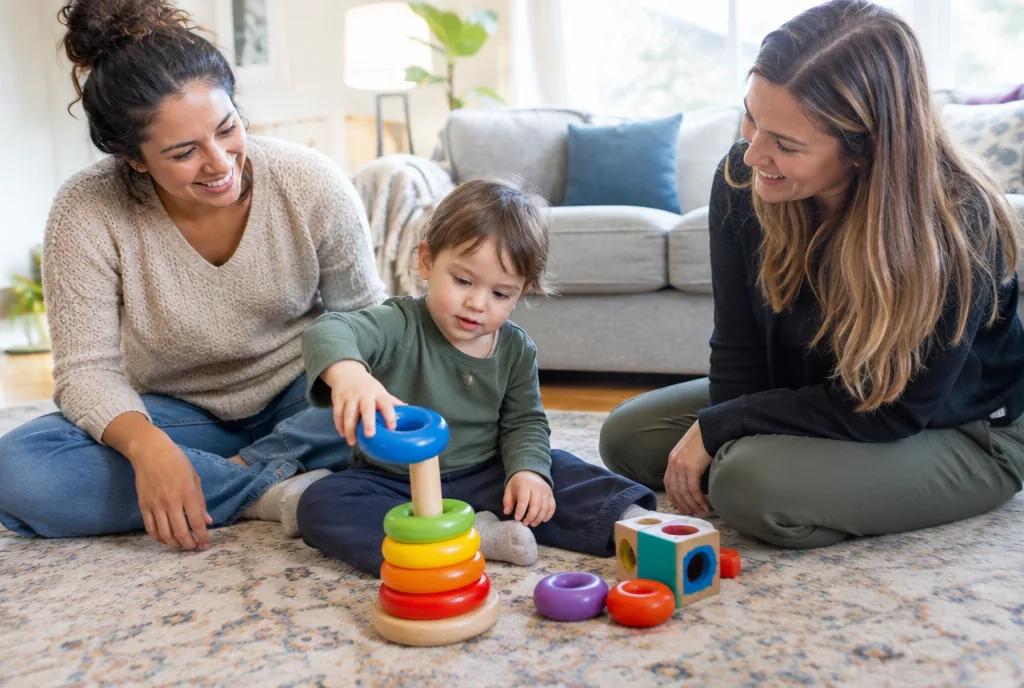
Elkonin boxes turn a spoken word into something a child can hear, touch, and organize: one box for each sound. Often called sound boxes or word boxes, they give you a concrete way to help your child pull apart words such as cat into /k/ /a/ /t/, then put the sounds back together. That small shift from looking at letters to listening for phonemes makes the activity useful for early readers and for older students who still need explicit practice with word sounds.
What Elkonin Boxes Do for Beginning Readers
An Elkonin box is a drawn square or rectangle that stands for one phoneme, the smallest individual sound in a spoken word. A child pushes a chip, button, or other counter into each box while saying the sounds. Later, when the child is ready, letter tiles or written letters can replace the counters. The visual layout keeps the sounds in order from left to right without asking the child to count printed letters.
The purpose of Elkonin boxes is to build phonemic awareness: the ability to hear and manipulate individual phonemes in spoken words. Phonemic awareness is auditory. A child can work on it before print is introduced, because the task begins with what the child hears and says, not what the child sees on a page. It is the most advanced part of phonological awareness, which also includes skills such as noticing rhyme, syllables, and onset-rime patterns.
This is also a multisensory routine. The child listens for a sound, says it aloud, and moves an object. That combination brings auditory, verbal, and tactile or kinesthetic information into one brief activity. The National Reading Panel identified phonemic awareness and letter knowledge as the two strongest school-entry predictors of reading success in the first two school years. Elkonin boxes give those early skills a repeatable structure.
Why each Elkonin box represents a sound, not a letter
The rule that prevents most confusion is simple: count sounds, not letters. Duck has four letters, but it has three phonemes: /d/ /u/ /k/. It needs three boxes. If a child is asked to make one box for every letter, the activity becomes a spelling worksheet and loses its central job of making speech sounds visible.
This rule also explains why the activity is called “sound boxes.” A box does not belong to a letter by itself; it belongs to the sound that a letter or group of letters represents. Say the word at a natural but careful pace, listen for the sounds, and decide the number of boxes before placing any letters. When you introduce print, keep returning to the spoken word first.
Use counters before letters when listening is the goal
Counters let the child show a sound without having to know its spelling. For sun, the child says /s/, moves one chip; says /u/, moves the next; and says /n/, moves the third. The child has segmented the word even if letters are not yet part of the lesson. That separation is useful: it shows whether the difficulty is hearing the sounds or matching sounds to letters.
How to use Elkonin boxes from first word to full blend
Use a mat with the right number of empty boxes and a small set of movable counters. Start with words that have clear sound-letter relationships. Two- and three-phoneme words such as go, cat, and sun give a child a manageable first success. When the routine is secure, move to four- and five-phoneme words such as frog and stamp.
-
Say the word slowly and clearly. Ask the child to repeat the whole word before doing anything with the boxes.
-
Stretch the word so its sounds can be heard. For map, you might say “mmmaaaappp” while keeping the sounds in order.
-
Have the child push one chip, penny, or button into each box from left to right for every sound heard. For map, the child moves three counters while saying /m/ /a/ /p/.
-
Ask how many sounds the word has. Count the counters together; the count should describe phonemes, not letters.
-
Finish by sweeping a finger under all the boxes from left to right and saying the word smoothly: map. This is the blending step.
Advertisement
Elkonin boxes are used primarily for segmenting: breaking a spoken word into individual phonemes. They also support blending because the final finger sweep asks the child to join those phonemes into a whole word. Segmenting and blending are two directions of the same sound work. Blending is generally easier than segmenting, so a beginner may benefit from blending practice before being asked to pull a word apart independently.
Keep phonemic awareness activities short and systematic. Effective instruction can take 10 to 15 minutes a day. Rather than mixing many kinds of sound manipulation at once, concentrate on one or two, for example segmenting and blending, and give the child several chances to respond.
Move from counters to letters only after the sounds are secure
Letters are powerful in Elkonin boxes, but timing matters. First make sure the child can segment three or four sounds reliably with counters. Then replace each counter with the letter or letter group that represents the sound. This sequence preserves the main idea: letters map onto sounds the child has already heard.
With cat, for example, the child first pushes three counters while saying /k/ /a/ /t/. Once that is dependable, the child places c, a, and t in the same three boxes while saying the sounds. A sweep under the boxes reads the word; saying the sounds while placing letters also supports encoding, or turning a spoken word into spelling.
Adding letters creates a direct bridge to letter-sound correspondence and the alphabetic principle: each phoneme is represented by a letter or a letter combination. Reviews of Word Boxes report support for phonemic awareness, sound-letter correspondences, and spelling from preschool through elementary school. The UFLI guidance also notes that using letters in the boxes is more effective than using tokens alone because it connects the sound task directly to reading and spelling development.
Handle tricky spellings without abandoning the sound rule
English spelling can look complicated in a sound-box routine, but the box count still comes from pronunciation. Teach the simple cases first. Then use the exceptions as a chance to show that a sound can be spelled with more than one letter, or that one letter can stand for more than one sound.
| Word or pattern | Sounds and boxes | What the child should notice |
|---|---|---|
| duck | /d/ /u/ /k/ = 3 boxes | ck represents one sound, so four letters do not mean four boxes. |
| ship | /sh/ /i/ /p/ = 3 boxes | sh goes in one box. A dotted divider can show two letters working together for one sound. |
| lamb or knife | 3 phonemes each | The silent b or k does not get its own sound box; it shares a box with the neighboring sound. |
| bike | /b/ /ī/ /k/ = 3 boxes | The final silent e stays in the same box as the preceding letter that represents the long-vowel sound. |
| x | /ks/ or /gz/ = 2 sounds | Write x across two boxes or across a box boundary because it represents two phonemes. |
| -ed | /t/, /d/, or /id/ | Choose boxes by pronunciation: walked, played, and wanted do not have the same ending sound. |
Digraphs such as sh, ch, th, and ck each belong in one box when they make one phoneme. The same principle applies to trigraphs such as tch and dge: the written pattern may be longer, but the child is tracking the sound. Let the sound count lead and use the print to explain the spelling after the child can hear it.
Choose a sound-box routine that fits the child
Elkonin boxes can work with children from about age five and with older students who have reading difficulties. They are used in Response to Intervention at Tier 1 for general instruction and Tier 2 for more targeted help, often in a small group. In a classroom, you can model one word on a board, then give each child a mat and counters. At home, a few buttons and hand-drawn boxes are enough to begin.
For repeated practice, use a laminated whiteboard mat with dry-erase markers. Printable Elkonin-boxes templates are available in two-, three-, four-, and five-box formats from the National Center on Intensive Intervention. Reading Rockets provides K–2 sound-box mats and prepared word lists, while the UFLI handout includes directions, example words, and ways to differentiate for digraphs and silent letters.
Match the word card to the number of sounds
- Use two-box cards such as go, me, and no for the first routine.
- Use three-box cards such as cat, dog, and sun when the child is ready to segment independently.
- Use four-box cards such as frog, jump, and mask to extend the sequence.
- Use five-box cards such as stamp, blast, and crisp after shorter words are secure.
Do not use longer words simply because they look more advanced. The better next word is the one whose sounds the child can attend to accurately. If a sound is missed, repeat the word, stretch it again, and model the counter movement rather than moving on to a harder spelling pattern.
Avoid the mistakes that turn sound boxes into letter worksheets
Myth: One box always equals one letter
It does not. A box equals one phoneme. Ship has four letters but three boxes; duck also has four letters but three boxes. These examples are worth revisiting because they make the sound-versus-letter distinction concrete.
Myth: Start with hard words to make the activity challenging
Beginning with complex words can hide the skill you want to teach. Start with simple words and clear sound-letter relationships. Add consonant clusters, digraphs, silent letters, and different -ed pronunciations when the child can already segment and blend the simpler pattern.
Myth: Letters should appear right away
Not if the child is still learning to hear separate sounds. Tokens let you assess and practice auditory segmentation first. Introduce letters after the child is secure with three or four sounds, then use the boxes to connect what is heard to what is written.
Myth: Elkonin boxes are only for spelling
They support spelling, but their first job is phoneme segmentation. Always end with the finger sweep and the whole spoken word. That final blend keeps the activity tied to both reading and encoding rather than to letter placement alone.
Build toward harder phonemic awareness activities
Phonemic awareness skills increase in difficulty from identifying and isolating sounds to blending, segmenting, and manipulating them. Manipulation is the most demanding level. Phoneme deletion asks a child to remove a sound and say what remains: “Say smile without /s/” becomes mile. It is especially difficult when the sound is inside a word or in a consonant cluster.
Phoneme substitution is often the hardest phonemic awareness task because it combines removing one sound and adding another. Changing /s/ in sat to /m/ makes mat. Standard Elkonin sound boxes focus most naturally on segmenting and blending, but they can be adapted for manipulation by changing the counter or letter in one box. For first graders, deletion practice paired with writing can help consolidate the new skill.
The point is not to rush to the hardest task. Use sound boxes to establish the ordered sequence of phonemes first. Once a child can hear, move, blend, and map those sounds consistently, a change in one box gives a visible way to practice the more complex work of deleting or substituting a phoneme.
Frequently Asked Questions
What is the purpose of Elkonin boxes?
Elkonin boxes develop phonemic awareness by helping a child hear and represent each sound in a spoken word. They also create a bridge to sound-letter correspondence, reading, and spelling when letters are added.
How do you pronounce Elkonin box?
Say “EL-kuh-nin box,” with the stress on the first syllable of Elkonin. The method is named for Daniil Borisovich Elkonin, a Soviet psychologist.
Are Elkonin boxes for blending or segmenting?
They are primarily for segmenting: one counter moves into each box for each phoneme. The routine ends with blending when the child sweeps a finger under the boxes and says the whole word.
What is the hardest phonemic awareness skill?
Phoneme substitution is considered the hardest because the child must remove one sound and add another. Deletion is also difficult, particularly when a sound occurs in the middle of a word or in a consonant cluster.
What do Elkonin boxes help develop?
They help develop phonemic awareness, phoneme segmentation, blending, sound-letter correspondences, encoding for spelling, and understanding of the alphabetic principle.
How do you use an Elkonin boxes printable?
Choose a mat with the same number of boxes as the word’s phonemes. Say and stretch the word, move one counter per sound from left to right, count the sounds, then sweep under the boxes to blend the whole word. Add letters only after the child can segment the sounds securely.