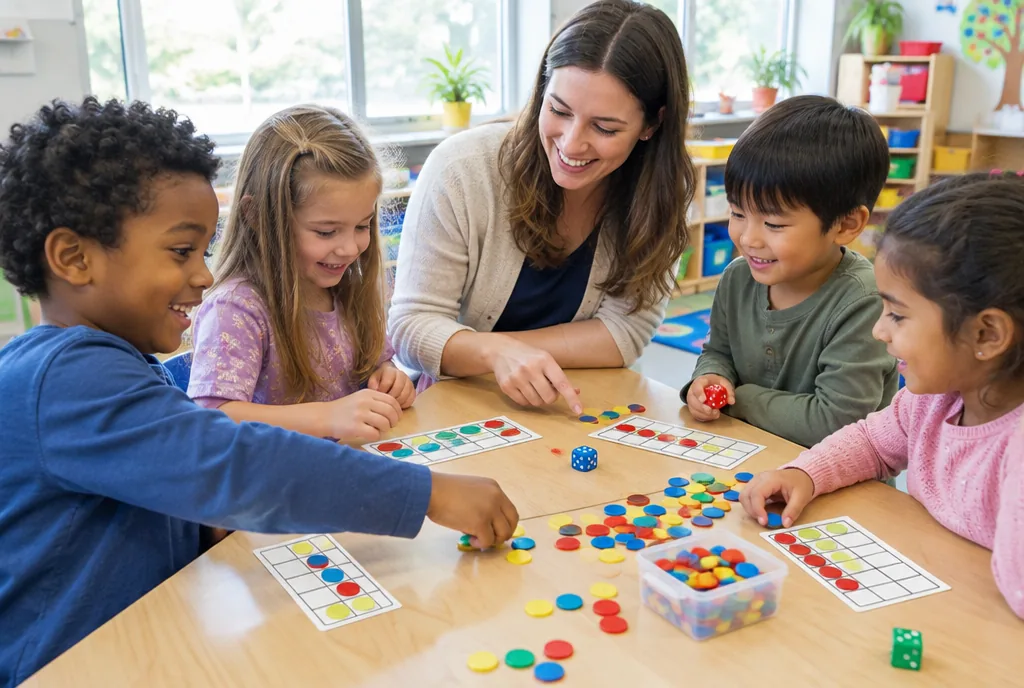
Social thinking is the work of noticing what is happening around you, interpreting what people may mean or feel, and choosing a response that fits the moment. Social Thinking, with capital letters, is Michelle Garcia Winner’s methodology for making that usually invisible process teachable. Rather than asking a child simply to “behave,” it gives you, as a parent or teacher, concrete language, visuals, and practice for the thinking that comes before a social response.
Why Social Thinking looks beyond the behavior you can see
Michelle Garcia Winner developed the Social Thinking methodology in the mid-1990s after working with students who could be very bright yet still struggle to think through social situations. The approach was developed for learners with autism, ADHD, nonverbal learning disorder (NVLD), and others with or without a diagnosis who find social learning hard. It is not a single therapy. Instead, it organizes evidence-informed practices such as modeling, natural teaching, visual support, and self-management into usable strategies.
That distinction matters. A child who leaves a group, interrupts, or misses a cue is showing a behavior. The next question is what social information the child noticed, how it was interpreted, and what problem-solving option was available. Teaching only the visible action can miss the learning process needed in the next, different situation.
The Social Thinking-Social Competency Model describes this difference as an iceberg. Above the waterline are the behaviors other people can observe. Under the waterline are three connected processes: social attention, social interpretation, and problem solving. The visible choice is only the tip.
Use the iceberg to unpack one social moment
Imagine a group working on a classroom project. One student notices classmates looking away, fidgeting, and losing focus. That is social attention. The student considers what those cues might mean: perhaps the group needs a break or a clearer plan. That is social interpretation. The student suggests switching tasks for a few minutes, and the group agrees. That is problem solving followed by a social response.
You can make this sequence visible without treating it as a test. Ask, “What did you notice?” before asking, “What should you do?” Then explore more than one possible meaning. The goal is not to demand a perfect guess about another person’s mind. It is to help a child use the information that is available and consider a response.
A related framework, the Social-Emotional Chain Reaction, traces a situation through thoughts, feelings, actions, and an outcome. At home or school, you can use it after a difficult moment: name the situation, identify possible thoughts and feelings, look at the action, and discuss what happened next. This keeps the conversation focused on a sequence that can be understood and revised.
Give hidden rules a name instead of a moral label
Many social expectations are never said aloud. Social Thinking calls these hidden rules. They can change with the location, the relationship, and the culture, so there is no universal checklist of “correct” behavior. The expectation in a noisy cafeteria may differ from the expectation during a small-group lesson, and both may differ at home.
The terms expected and unexpected give you and the child a neutral way to discuss the effect of an action. Expected behaviors tend to give other people comfortable thoughts; unexpected behaviors may give them uncomfortable or confused thoughts. The terms are deliberately not the same as good/bad or right/wrong. They invite a child to look at context and impact rather than absorb a judgment about who they are.
For example, a lunchroom group plan may be to sit, eat, and talk together. If a child gets up and walks around the room, the child’s body is “out of the group,” and other students may have uncomfortable thoughts because the shared plan changed. Returning to the table puts the body back in the group. The point is not that walking is always wrong; it is to notice the particular group plan and its effect.
Build the vocabulary that makes social learning discussable
A shared vocabulary lets you replace vague commands with questions a child can act on. Instead of “Sit down and be quiet,” try “What is the group plan?” Instead of “Pay attention,” ask, “What can you learn by thinking with your eyes?” These prompts point to a process, not just a correction.
| Social Thinking concept | What it helps a child notice |
|---|---|
| Thoughts and feelings | People can have thoughts and feelings about what happens around them. |
| The group plan | A group often has a shared purpose or plan, even when nobody states it directly. |
| Thinking with your eyes | Looking can provide information about what people are doing and planning. |
| Body in the group | Body position and movement can show whether someone is participating with the group. |
| Hidden rules and expected behaviors | Unspoken expectations depend on the situation, people, and culture. |
| Smart guess or wacky guess | A smart guess uses observations and prior knowledge; a wacky guess leaves that information out. |
| Flexible or stuck thinking | Plans sometimes need to change when the group or situation changes. |
| Size of the problem | A glitch, little, medium, or big problem calls for a response of a similar size. |
Perspective taking belongs at the center of this work. Basic perspective taking asks, “What might that person be thinking or feeling?” Advanced perspective taking asks what the other person needs to consider about you and the situation at that moment. Neither question requires you to announce a single hidden truth. They make room for observation, a reasonable guess, and a check against what happens next.
Focus on the social skills that connect in real life
Social skills are not one ability. The ILAUGHS framework identifies seven related areas: initiating communication; listening with ears, eyes, and brain; abstract and inferential thinking; understanding perspective; gestalt processing, or seeing the big picture; humor and human relatedness; and self-regulation and self-awareness.
In a real conversation, these areas overlap. A child may need to initiate with a greeting, listen to a peer’s answer, infer that the peer wants to keep talking, notice the group’s overall activity, and regulate disappointment if the plan changes. Working on only one visible behavior can leave the rest of the sequence unaddressed.
Flexible thinking is especially useful because groups rarely follow a script. In the Superflex curriculum, flexible thinking is contrasted with Rock Brain, a character representing stuck thinking. This is not a demand that children erase their own preferences. It is a way to notice when a plan has changed and to look for a workable next step.
Choose a social thinking curriculum from the child’s starting point
A social thinking curriculum is most useful when its concepts match what a learner already understands. We Thinkers! is designed for preschool and early elementary children, about ages 4 to 7. Its two volumes, Social Explorers and Social Problem Solvers, use five storybooks each to introduce vocabulary such as thoughts and feelings, the group plan, hidden rules, flexible thinking, and the size of a problem.
You Are a Social Detective!, in its second edition, is an entry point for children from about age 5. It teaches children to use their eyes, ears, and brain to observe what people plan, do, and mean. The recommended sequence places this foundation before Superflex.
Superflex: A Superhero Social Thinking Curriculum is a cognitive-behavioral curriculum for self-regulation. Its 14 UnthinkaBots represent unhelpful thinking or behavior patterns, while 14 Thinkables represent proactive strategies. The important framing is that Superflex is the child’s own capacity for flexible thinking and problem solving, not an outside hero and not a reward system. Using a Superflex point as a prize for compliance misses that purpose.
For school-age learners, Think Social! A Social Thinking Curriculum for School-Age Students is the core curriculum. It has eight chapters and more than 69 evidence-informed concepts, frameworks, and strategies. Its lessons progress from Social Thinking Vocabulary toward perspective taking, adjusting one’s language, and self-assessing in groups. Materials include step-by-step guidance and IEP goal suggestions for learners from kindergarten through adulthood.
Teach social thinking during lessons and ordinary routines
Teaching works best when children hear the same language in planned instruction and in the settings where social choices actually happen. The methodology can be used in the classroom, at recess, in the cafeteria, during physical education, and online. A recommended rhythm combines explicit instruction for about 20 to 30 minutes each week with teachable moments throughout the day.
- Start with shared words. Introduce concepts such as thoughts and feelings, the group plan, and thinking with your eyes. Use them consistently across adults and settings.
- Practice observation before correction. Watch a short clip of the group or observe a routine together. Ask what students notice, what information supports a smart guess, and what the group may be planning.
- Move from observation to perspective. Use Social Detective language to connect cues with possible thoughts and feelings. Keep guesses grounded in what students can observe.
- Add regulation tools after the foundation. Once core concepts are understood, introduce Superflex and its Thinkables as strategies for moments of stuck thinking, distraction, or an oversized reaction.
- Return to the real setting. At a transition, lunch, group project, or online activity, briefly name the group plan and let the child try one strategy. Review the outcome afterward.
At home, you can use the same pattern in everyday activities. Before a family game, name the plan. After a disagreement, trace the situation, thoughts, feelings, action, and result. A short, specific conversation gives more practice than a lecture given long after the moment has passed.
Separate social learning needs from common misunderstandings
- Myth: An unexpected behavior means a child is being bad. Expected and unexpected are neutral terms for discussing how behavior affects others in a particular context. They are not moral verdicts.
- Myth: There is one cause of poor social skills. Social learning differences and challenges can have many influences. Autism, ADHD, social communication disorder, nonverbal learning disorder, and social anxiety may be involved. Trauma, limited practice, sensory processing difficulties, and portable screen time that displaces face-to-face interaction can also affect social learning. A child’s needs should not be reduced to one assumed cause.
- Myth: Every social difficulty is inborn. The methodology distinguishes social learning differences, such as differences associated with autism, from social learning challenges that may be acquired, including through trauma or lack of practice.
- Myth: Evidence-informed means every part of a whole program is equally established. Social Thinking describes its methodology as evidence-informed, drawing on social information processing, metacognition, and developmental psychology. Peer-reviewed work and component studies exist; a 2024 randomized controlled trial reported significant improvements in social communication and self-regulation for autistic schoolchildren in a Social Thinking-based intervention. Evidence for the whole methodology continues to grow.
That careful framing protects the child as well as the instruction. It keeps you focused on observable needs, context, and opportunities to learn rather than on blame or one-size-fits-all explanations.
Frequently Asked Questions
What is social thinking?
Lowercase social thinking refers broadly to the cognitive process of thinking about social information. Social Thinking is the name of Michelle Garcia Winner’s methodology for teaching that process through shared vocabulary, concrete frameworks, and practice. It is not a single therapy.
What is an example of social thinking?
During a group project, a student notices classmates becoming restless, interprets that the group may need a break or a clearer plan, and suggests a change. Noticing, interpreting, and proposing a response show social attention, social interpretation, and problem solving working together.
What causes poor social skills in kids?
There is no single cause. Social learning differences or challenges can be associated with autism, ADHD, social communication disorder, nonverbal learning disorder, social anxiety, sensory overload, trauma, limited practice, and other factors. More than one influence may be present.
What are important social skills?
Important skills include initiating, listening with eyes, ears, and brain, making inferences, taking another person’s perspective, seeing the big picture, understanding humor and human connection, and regulating yourself. Hidden rules and flexible thinking help connect those skills in everyday situations.
How do teachers teach social thinking?
As a teacher, you build a common vocabulary, teach concepts explicitly for about 20 to 30 minutes a week, and use brief teachable moments during routines. You can begin with observation and group plans, introduce Social Detective skills, and add Superflex only after children understand the core concepts.